Blista: A Playful Display Font for Creative Projects
When you're working on a design that needs to feel personal and warm, the typography you choose does most of the heavy lifting. You might have the perfect color palette and a great layout, but if the font feels cold or generic, the whole piece can fall flat. This is where a typeface like Blista comes into play. It is a versatile display font designed to bring a romantic and exquisite feel to your work without overwhelming the rest of your design elements. It strikes a balance between being stylish enough for professional use and playful enough for personal creations.
Understanding the Visual Style of Blista
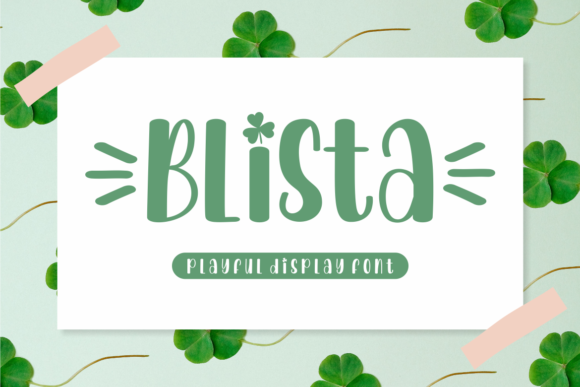
At its core, Blista is a creative font that leans into a handwritten aesthetic but with the polish of a modern typeface. It isn’t just another messy script; it has defined curves and a consistent baseline that keeps it looking professional. The visual personality of Blista is approachable. It feels like it was written by a human hand, which immediately lowers the barrier between your brand and your audience. This characteristic makes it an excellent choice for logo design where you want to establish a friendly connection instantly.
Unlike rigid sans serif font families or traditional serif font options that often feel corporate or academic, Blista offers a distinct charm. It features fluid connections between letters and varying stroke widths that mimic the natural pressure of a pen. This gives your text a sense of movement and life. Whether you are designing a header for a website or a label for a product, Blista injects a dose of personality that standard fonts simply cannot replicate. It is a premium font that feels artisanal, making it perfect for projects that value craftsmanship.
Where This Font Truly Shines
One of the strongest aspects of Blista is its versatility across different mediums. Because it is a display font, it is optimized for larger sizes where its details can be appreciated. This makes it a powerhouse for editorial design. Imagine using Blista for the chapter titles of a cookbook or the headlines of a lifestyle magazine. It draws the eye immediately, setting a mood that is inviting and sophisticated before the reader even engages with the body text.
For those involved in packaging design, Blista offers a way to stand out on crowded shelves. It works beautifully for boutique products, artisanal goods, or beauty brands. The script font qualities suggest that the product inside is special and handmade. However, it is important to consider the medium. On a coffee bag or a candle box, Blista can convey warmth. On heavy industrial equipment packaging, it might feel out of place. Understanding the context is key to using this creative font effectively.
Digital Applications and Brand Identity
In the digital realm, web design often suffers from a lack of personality due to the overuse of system fonts. Blista can solve this problem when used strategically. It is excellent for hero sections, call-to-action buttons, or promotional banners on e-commerce sites. Using it for your main body copy on a website isn't recommended—readability over long paragraphs is crucial—but for short bursts of text, it elevates the brand identity significantly.
Social media graphics are another area where Blista excels. Platforms like Instagram and Pinterest are highly visual, and a unique typeface can stop a user from scrolling. Whether you are creating quote cards, story templates, or promotional announcements, Blista helps your content look cohesive and high-quality. It helps in building a recognizable visual language that your followers will associate with your content, improving brand recall and engagement over time.
Practical Guidance for Designers and Creators
Choosing a font is rarely just about aesthetics; it is about function. If you are a designer, entrepreneur, or crafter looking to add Blista to your toolkit, there are a few practical considerations to keep in mind to ensure the best results.
Testing Font Pairings
No display font is an island. To make Blista work in a professional setting, you need to pair it with a complementary typeface. Because Blista has a lot of personality and movement, it pairs best with something stable and neutral. A clean sans serif font is often the best choice here. Think of fonts like Montserrat, Lato, or Open Sans. The simplicity of the sans serif will ground the design, allowing Blista to act as the accent that draws attention.
You could also pair it with a classic serif font for a more editorial, high-fashion look. For example, using a serif like Playfair Display or Lora for subheadings can create a nice hierarchy. The key is to avoid pairing Blista with other script font options or overly decorative fonts, as this will create visual chaos and hurt readability. When testing, always look at the contrast between the two fonts. You want them to be different enough to be distinct but similar in mood to feel cohesive.
Evaluating Project Fit and Readability
Before you commit to using Blista, ask yourself about the primary goal of the text. If the goal is to convey complex information quickly, such as a technical manual or a dense blog post, Blista is not the right tool. It is a creative font meant for emotional impact, not information density. However, if the goal is to evoke a feeling—romance, nostalgia, playfulness, or elegance—then it is an excellent fit.
Readability is paramount. Even the most beautiful font fails if the audience cannot read it. Test Blista at the size you intend to use it. Check the spacing (kerning and tracking) to ensure letters don't collide in an illegible way. While the connected style of the font is part of its charm, you may need to adjust letter spacing in your design software to ensure clarity, particularly for web design where resolution and screen sizes vary.
Licensing and Commercial Use
For small business owners and entrepreneurs, the legal aspect of design assets is just as important as the visual aspect. Blista is a commercial font, which means you generally need a license to use it in projects that generate revenue. This includes merchandise, paid client work, and commercial branding. Always review the specific license terms provided with the font file. Some licenses cover desktop use only, while others include web fonts or app usage. Ensuring you have the correct license protects your business and supports the type designers who create these tools.
Bringing It All Together
Ultimately, Blista is more than just a collection of vector curves; it is a tool for storytelling. It allows marketers, bloggers, and designers to inject a specific, romantic mood into their work with ease. Whether you are designing a wedding invitation, a boutique logo, or a social media campaign, its versatility allows it to adapt to your vision. By focusing on strong font pairings and respecting readability guidelines, you can use this premium font to create designs that are not only beautiful but also effective in engaging your audience.