Bunny: Adding Handwritten Charm to Modern Designs
In the crowded landscape of modern typography, finding a typeface that balances professionalism with genuine warmth can be a challenge. Many designers and business owners find themselves stuck between the cold efficiency of geometric sans serifs and the often illegible chaos of overly decorative scripts. This is where Bunny enters the conversation. It is not just another script font; it is a carefully crafted display typeface designed to inject a sense of playfulness and approachability into your visual assets. With its distinct thick strokes and rounded curves, Bunny offers a solution for anyone looking to soften their brand voice without sacrificing impact.
The Anatomy of a Lovable Typeface
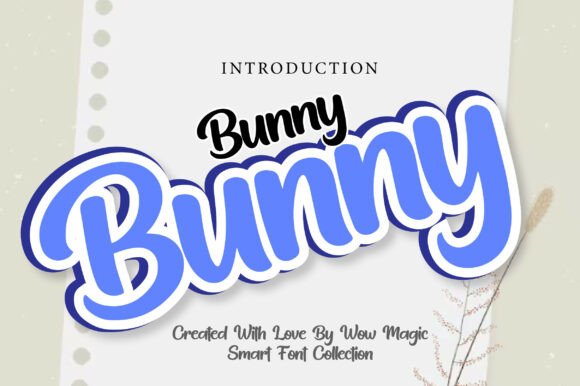
When you first look at the Bunny font, the immediate impression is one of softness and fluidity. Unlike traditional calligraphy scripts that can feel stiff or overly formal, Bunny embraces a bold, handwritten aesthetic. The visual characteristics are defined by smooth flowing shapes that mimic the natural motion of a hand holding a thick marker. This creates a rhythm in the text that feels organic rather than manufactured. The rounded terminals and gentle loops contribute to a personality that is inherently friendly. It avoids the sharp edges that can sometimes make typography feel aggressive or corporate, opting instead for a visual language that says, "welcome."
This font is categorized as a premium font because it solves specific design problems that free alternatives often cannot. Free script fonts frequently lack the kerning pairs and stylistic consistency required for professional logo design or packaging design. Bunny, however, is engineered to maintain legibility even when used at varying sizes. The bold script nature of the typeface ensures that it stands out against complex backgrounds, a crucial requirement for today’s busy social media graphics and dynamic web design layouts. It is a creative font that functions as a reliable design asset, bridging the gap between artistic flair and functional utility.
Strategic Applications: Where Bunny Belongs
Understanding where to deploy a font is just as important as choosing the right one. Bunny excels in environments where connection and emotion are the primary goals. For entrepreneurs in the lifestyle, food, or children’s sectors, this typeface is a natural fit. Imagine a line of organic baby products; the packaging needs to communicate safety, care, and joy. Using a rigid sans serif font might feel too clinical, while a standard serif font could feel too dated. Bunny provides that modern, "mom-approved" aesthetic that resonates with parents.
Here are specific scenarios where this display font shines:
- Children’s Branding and Education: From nursery wall art to educational apps, the legible yet playful nature of Bunny appeals to both children and adults. It captures the whimsy of childhood without looking cartoonish.
- Event Stationery: Birthday invitations, bridal showers, and party flyers benefit immensely from a handwritten font. It sets a celebratory tone immediately, signaling to the reader that the event will be fun and relaxed.
- Digital Content Creation: For bloggers and influencers, particularly in the food, travel, or DIY niches, using Bunny for headers or pull quotes can break the monotony of standard web text. It adds a personal signature to the content, making the creator feel more accessible.
- Product Packaging: On a shelf, consumers make split-second decisions. A bold, charming header on a label can draw the eye faster than a standard modern typography choice. It suggests that the product inside is made with love and attention to detail.
However, context matters. You would likely not use Bunny for the body text of a legal document or a dense technical manual. Its strength lies in its ability to act as a highlighter for key messages. It is the voice of the brand, used sparingly to emphasize the most important words, while a cleaner typeface handles the heavy lifting of paragraph text.
Design Mechanics: Hierarchy, Pairing, and Readability
One of the most common pitfalls in design is choosing a font based solely on how a single word looks. The true test of a typeface is how it functions within a system. When working with Bunny, visual hierarchy becomes intuitive. Because it is a bold script, it naturally commands attention. This makes it an excellent choice for H1 or H2 headers in editorial design, or for the main call-to-action on a poster.
Mastering Font Pairings
The secret to making a creative font like Bunny work in professional settings is font pairing. Because Bunny has such a strong personality, it pairs best with neutral, understated companions. If you pair it with another decorative font, the design will likely feel cluttered and chaotic.
Consider these practical combinations:
- Bunny + Clean Sans Serif: This is the gold standard for modern branding. A geometric sans serif (like Montserrat, Poppins, or similar clean families) provides a structured, grid-like counterpoint to Bunny’s organic curves. Use the sans serif for body copy and data, and Bunny for headlines to add warmth.
- Bunny + Classic Serif: For a more editorial, sophisticated vibe—think lifestyle magazines or high-end boutique packaging—pair Bunny with a traditional serif font. The contrast between the structured, formal serif and the playful script creates a dynamic tension that feels curated and expensive.
Evaluating Fit and Legibility
Before committing to Bunny for a brand identity, it is vital to test it against your specific content. A common mistake is testing a font only with its name. Try typing out your actual slogans, taglines, and product names. Check the flow of the letters. Does the connection between the 'B' and the 'u' look natural? Do the ascenders and descenders clash with adjacent lines?
Readability in a script font is often a concern. While Bunny is designed to be legible, you must respect the white space. If you use it for a headline, ensure the line height (leading) is generous enough that the loops of the letters don't crash into the text below them. Furthermore, contrast is key. Ensure that the color of the text stands out sharply against the background to maintain accessibility standards, especially for older audiences or those with visual impairments.
Licensing and Professional Usage
For designers and business owners, the technical side of typography cannot be ignored. Bunny is a commercial font, which implies that it comes with specific licensing agreements. This is a significant advantage over "free for personal use" fonts found on random internet archives. When you invest in a commercial license, you are buying legal security and professional support.
Always review the license details before finalizing a project. Does the license cover web design (usually via @font-face embedding)? Does it cover physical goods for sale (like print-on-demand t-shirts or mugs)? A high-quality premium font usually offers clear tiers for these uses. Using properly licensed fonts ensures that your brand identity is built on solid legal ground, preventing headaches down the road if your business scales or if you decide to trademark your logo.
Bringing Personality to the Forefront
Ultimately, typography is about communication. The words convey the message, but the font conveys the feeling. Bunny is a tool for designers who want to humanize their work. In an era of automation and AI-generated content, the "human touch" has become a premium commodity. By utilizing a typeface that mimics the imperfections and flow of human handwriting, you signal authenticity.
Whether you are designing a logo for a local bakery, creating graphics for a parenting blog, or laying out a party invitation, Bunny offers a distinct voice. It is cheerful without being annoying, and bold without being aggressive. It allows you to step away from the rigid constraints of standard corporate typography and embrace a style that is, quite simply, more fun. By integrating Bunny into your design assets, you are equipping yourself with a versatile typeface capable of transforming standard layouts into memorable visual experiences.