Ironwood Western: Authentic Frontier Typography
There’s a specific feeling that hits you when you look at a vintage wanted poster or a weathered saloon sign in a museum. It isn’t just about the text; it’s about the weight of history, the grit of the frontier, and the craftsmanship of a bygone era. If you are working on a project that needs to evoke that rugged, hand-hewn aesthetic, standard digital fonts often fall short. They look too clean, too perfect, and too modern. This is where Ironwood Western steps in, bridging the gap between modern design utility and the raw authenticity of 19th-century letterpress printing.
The Anatomy of Authenticity
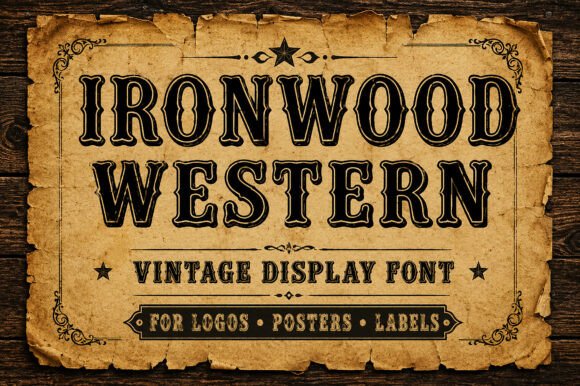
At its core, Ironwood Western is a premium display font, but calling it just a typeface doesn't quite capture its essence. It is a design asset engineered to tell a story. The defining feature of this font is its construction. Unlike many digital typefaces that try to simulate age through simple filters, Ironwood Western is built with a distressed, ink-stamped texture that mimics the look of metal type pressed into rough paper. It features an elegant ornamental border that frames the characters, instantly transporting the viewer back to the days of frontier saloons and artisanal trades.
The personality of Ironwood Western is unapologetically bold. It commands attention without shouting. The serifs are sturdy and grounded, designed to look as though they were carved from iron or wood—hence the name. This is not a font for whispering; it is a font for declarations. Whether you are using it for a header in a magazine or the logo of a new business, it brings an immediate sense of established craftsmanship and historical prestige to the layout.
Where the West Meets the Brief
Understanding where to apply a creative font like Ironwood Western is half the battle in design. Because it carries such a strong visual personality, it excels in projects where branding and atmosphere are paramount. It is an extraordinary selection for artisanal whiskey bottle labels, where the texture of the font can complement the liquid inside. It works perfectly for rustic saloon branding, custom leatherwork logos, and vintage event posters. If you are designing for a brewery, a barbecue restaurant, or a heritage clothing line, this typeface does the heavy lifting for your brand identity.
However, the utility of this display font extends beyond the obvious "western" themes. In the world of modern typography, contrast is key. Imagine a sleek, minimalist web design layout using a clean sans serif font for the body text. Now, introduce Ironwood Western for the main headlines. The juxtaposition of the clean, modern interface with the rugged, distressed texture of the headlines creates a powerful visual hierarchy. It tells the audience that the brand has roots, history, and substance, even if the product is digital. This approach works well for blogs, podcast cover art, and social media graphics where you need to stop the scroll and grab attention.
Designing with Purpose: Hierarchy and Pairing
When you integrate a bold serif font like this into your toolkit, you have to think about readability and visual flow. Ironwood Western is designed for impact, not for body copy. If you try to set a full paragraph in a textured, decorative display font, you will likely fatigue your reader's eyes. Instead, use it for short bursts of text: headlines, sub-headers, logos, and pull quotes. Its strength lies in its ability to anchor a design.
Font pairing is essential here. To let Ironwood Western shine, you need to support it with a font that knows when to step back. A clean sans serif font, such as a geometric or grotesque style, provides a modern counterpoint to the vintage texture. Alternatively, a simple, legible serif font can bridge the gap between the old and the new. If you are working on a layout that requires a bit more flair, a subtle script font or a handwritten font can be used for accent text, but be careful not to create a "font soup" where too many styles are competing for attention. The goal is consistency.
Practical Application for Business Owners
For entrepreneurs and small business owners, choosing the right typeface is a strategic decision. Ironwood Western isn't just a stylistic choice; it is a tool for perception. When a customer sees a logo or packaging designed with a high-quality commercial font like this, they subconsciously register the effort and quality put into the brand. It suggests that the business cares about its image and, by extension, its product.
Consider the tactile experience of print design. On a business card printed on thick, cotton stock with a debossed finish, the texture of Ironwood Western can be felt. On a bottle label, it stands up to condensation and handling. In digital spaces, it renders crisply on high-resolution screens, maintaining its distressed charm without becoming pixelated or muddy. Whether you are publishing a book cover, designing merchandise, or creating signage for a physical storefront, this font adapts to the medium while retaining its core identity.
Evaluating the Fit and Licensing
Before you commit to a creative font for a major campaign, it is wise to test how it behaves in your specific environment. Ironwood Western comes with distinct styles and features that allow for versatility. You should explore how the ornamental borders interact with your layout—sometimes they are the perfect frame, other times they might be too bulky, and you might prefer the standalone characters.
Always test your font pairings in context. Don't just look at the letters side-by-side; look at them in a sentence, then in a paragraph, then on a mockup of a website or a bottle. Check the kerning and spacing to ensure the visual rhythm feels right. Furthermore, because this is a premium font intended for commercial use, ensure you understand the licensing. Whether you are a freelancer using it for multiple clients or a business using it for a single product line, having the correct commercial license protects your project and respects the craft of the type designers who created Ironwood Western. It is a valuable design asset that, when used with intention, can elevate a project from standard to standout.