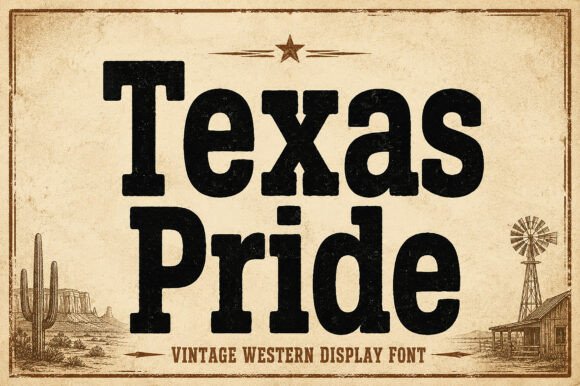
Texas Pride: Capturing the Spirit of the West
More Than Just a Font: A Western Character Study
When you look at Texas Pride, you aren't just seeing letterforms; you are looking at a specific piece of visual history. It’s a display font that refuses to be ignored, built on a foundation of solid serif structures that feel heavy, grounded, and permanent. If you’ve ever driven past a weathered ranch gate or seen a vintage rodeo poster from the mid-20th century, you recognize this aesthetic immediately. It captures that raw, earthy spirit of the Wild West without feeling like a caricature.
The personality of this typeface is confident and robust. It doesn't whisper; it speaks with authority. The letterforms have a "cowboy-esque" persona, featuring distinct serifs and a bold weight that anchors it to the page. This isn't the kind of font you use for body text in a novel; it is a specialist tool for headlines that need to command attention. It evokes a sense of tradition, grit, and authenticity that modern, minimalist sans-serifs often struggle to convey.
Practical Applications: Where Western Charm Meets Modern Design
Finding the right context for a premium font like this is crucial. Because Texas Pride carries such a strong cultural connotation, it shines brightest in projects where heritage and boldness are assets. Think about the specific needs of a brand identity for a local brewery, a BBQ joint, or a mechanic shop. These businesses thrive on trust and a rugged image, and this font delivers that instantly.
Here are a few specific areas where this typeface excels:
- Logo Design and Branding: For businesses aiming for a rustic or Americana vibe, Texas Pride creates a standout logo. It works exceptionally well for outdoor apparel brands, leather goods manufacturers, or agricultural businesses.
- Editorial and Packaging Design: Imagine a magazine cover feature on country living or the packaging for a small-batch hot sauce. The font’s vintage charm adds a layer of perceived quality and craftsmanship to the product.
- Merchandise and Apparel: T-shirts, hats, and posters are the natural home for a display font. The bold nature of the typeface ensures legibility from a distance, making it perfect for event posters or concert graphics.
- Digital Media: Even in the digital space, Texas Pride has a place. It can be used for hero sections on web design projects or as a striking overlay on social media graphics to cut through the noise of a busy feed.
Design Strategy: Pairing and Visual Hierarchy
Using a creative font with this much character requires a bit of strategy to maintain visual hierarchy. You generally want to avoid pairing Texas Pride with another decorative font. The goal is contrast. A clean, geometric sans serif font like Montserrat or Open Sans makes an excellent partner. The clean lines of the sans-serif allow the intricate details of the serif to pop without clashing.
When evaluating font pairings, consider the mood you are setting. If Texas Pride is the loud, charismatic lead singer, your secondary font needs to be the reliable bass player—supportive but not competing for the spotlight. Use the western font for your H1 headers and maybe pull quotes, but switch to a highly legible sans-serif for your sub-headers and body copy to ensure readability.
Evaluating Fit and Technical Considerations
Before committing to Texas Pride for a commercial project, it’s worth doing a "gut check" on the audience. While the vintage charm appeals to a wide demographic, it specifically resonates with adults aged 20–50 who appreciate nostalgia, authenticity, and craftsmanship. If your target audience is looking for hyper-modern, tech-forward aesthetics, this might not be the right tool. However, for small business owners, crafters, and marketers targeting the "maker" market or rural lifestyle sector, it is an invaluable design asset.
From a technical standpoint, always check the character map of the typeface. A good premium font often includes alternate characters, ligatures, or swashes that can add flair to specific letters. Additionally, review the commercial licensing. If you are creating merchandise or products for sale, you typically need a license that covers physical goods, not just digital use. Ensure the file formats (.OTF or .TTF) are compatible with your design software, whether you are using Adobe Illustrator, Photoshop, or Affinity Designer.
Final Thoughts on Implementation
The strength of Texas Pride