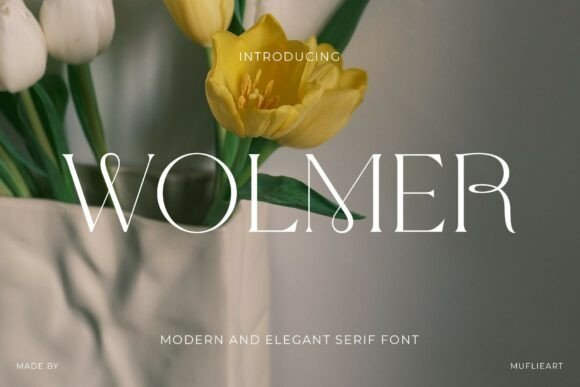
Wolmer: Where Modern Elegance Meets Fluid Artistry
Finding a typeface that feels both timeless and fresh is a constant challenge in design. Many serif fonts lean heavily into tradition, feeling stuffy or overly formal. Others chase trends, sacrificing longevity for fleeting style. Wolmer carves out its own space. It’s a modern elegant serif font that doesn’t just sit on the page—it performs. With its sweeping curves and poetic contours, it offers a sophisticated voice for projects that demand both precision and personality.
The Anatomy of a Contemporary Serif
What makes Wolmer immediately distinct is its architectural signature. Look closely at the terminals—the ends of letters like ‘c’ or ‘s’. Instead of blunt cuts or sharp serifs, Wolmer uses breathtaking, teardrop-shaped loops. These aren’t just decorative; they guide the eye along the letterform, creating a sense of continuous motion. The crossbars, where horizontal strokes meet vertical stems, often twist and interlock. This transforms traditionally rigid structures into fluid art, giving headlines and logos a dynamic, almost kinetic energy.
Despite this artistic flair, Wolmer maintains impeccable legibility. Its generous optical tracking—the intentional spacing between letters—lets negative space breathe. This creates a clean, airy feel, much like the layout of a high-fashion editorial spread. The high-contrast silhouette, where thick and thin strokes are pronounced, ensures it cuts sharply when used over photography or complex backgrounds. It’s a display font built for impact, but one that respects the reader’s eye.
Practical Applications: Beyond the Mood Board
Wolmer’s personality shines in contexts where quality and perception are paramount. For brand identity, it’s a natural fit for industries built on trust and luxury. Imagine it on a logo for a bespoke tailor, a fine jewelry brand, or a boutique hotel. The font communicates craftsmanship without saying a word. Its elegance is understated, not shouty, which helps build a sense of enduring prestige.
In editorial design and packaging design, Wolmer excels at creating hierarchy. Use its boldest weight for a magazine headline to grab attention, then pair it with a clean sans-serif for body copy. On packaging for premium cosmetics, perfumes, or artisanal foods, its curved details can mirror the product’s own aesthetic—perhaps echoing the curve of a perfume bottle or the swirl of chocolate ganache. For web design, it can be used strategically for hero section headings or pull quotes, adding a touch of sophistication to digital layouts without compromising load times or readability on screens.
For personal projects and social media graphics, Wolmer helps content creators and bloggers stand out. It’s perfect for creating elegant quote graphics, stylizing podcast episode titles, or designing standout covers for digital guides. Wedding stationery suites benefit immensely from its poetic fluidity, offering a modern alternative to traditional calligraphy scripts while maintaining a deeply personal and graceful feel.
Making Wolmer Work for You
Choosing a premium font is an investment, so evaluating fit is crucial. Start by defining the emotional tone of your project. Wolmer conveys modern grace, confident femininity, and artistic refinement. If your brand voice is rugged, industrial, or playfully juvenile, it may not align. Test it with your core message. Set your headline or brand name in Wolmer. Does the personality match the story you want to tell?
Next, consider font pairing. Wolmer’s high-contrast, flowing style pairs beautifully with simple, geometric sans-serif fonts. Think of a clean typeface like Montserrat or Poppins for body text—this contrast lets Wolmer’s details shine without visual competition. Avoid pairing it with other highly decorative or script fonts, as the result can become chaotic. Always check the font’s included styles. Does it offer the weights (Light, Regular, Bold) you need for full typographic hierarchy?
Readability is key, even for a display font. Use Wolmer for short bursts of text: headlines, titles, logos, and captions. For longer paragraphs, switch to a more neutral typeface. Always test its legibility at small sizes, especially for mobile web design, and check how it renders in different color contrasts. Finally, understand the licensing. Ensure the commercial license covers your intended use—whether for a client’s logo, merchandise for sale, or digital product templates. A clear license protects you and respects the type designer’s work.
Ultimately, Wolmer is more than just a creative font. It’s a strategic design asset. Used thoughtfully, it can elevate brand perception, create visual consistency across touchpoints, and engage an audience that appreciates nuance and quality. It doesn’t just spell out words; it articulates a feeling of contemporary, understated luxury. In a crowded visual landscape, that kind of authentic voice is invaluable.