Alica: Where Victorian Elegance Meets Modern Design
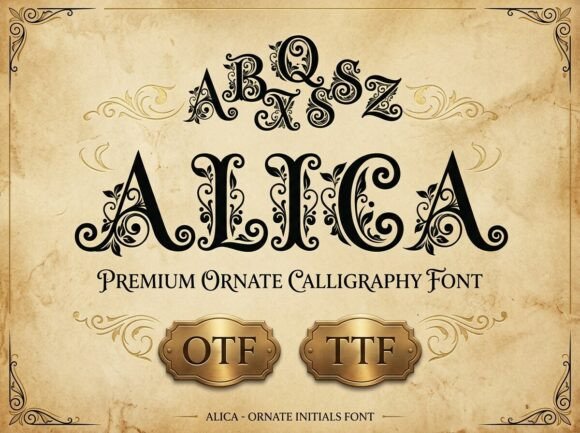
When you first encounter the Alica typeface, the immediate impression is one of intricate artistry. This is not merely a set of characters; it’s a collection of ornamental illustrations. Each capital letter in the Alica font family is a distinct composition, featuring sweeping calligraphic swashes that intertwine with delicate floral vines and leaf motifs. The style draws heavy inspiration from Victorian engraving and botanical prints, resulting in a visual texture that feels both historic and luxurious. For designers seeking to evoke a sense of heritage and sophistication, Alica offers a distinct alternative to standard script fonts or modern serifs.
The personality of this premium font is undeniably opulent. It commands attention through its sheer density of detail. Unlike minimalist sans serif fonts designed for screen legibility, Alica is a display font meant to be the focal point. The letterforms possess a high contrast between thick and thin strokes, a hallmark of traditional calligraphy that adds rhythm and movement to the text. Because of its ornate nature, it functions best when used sparingly. Treating Alica as a background element often results in visual clutter, whereas using it for a headline or monogram allows the intricate details to breathe and be appreciated individually.
Strategic Applications for Brand Identity
Understanding where to deploy a typeface like Alica is crucial for effective brand strategy. Its strength lies in establishing a high-end brand identity. For entrepreneurs in the luxury sector, the font serves as a visual shorthand for quality and tradition. Consider the wine and spirits industry: a premium wine label requires typography that suggests the liquid inside has been aged and crafted with care. Alica’s botanical elements pair naturally with vineyard imagery, creating a cohesive label design that stands out on a crowded shelf.
Beyond packaging design, the font excels in editorial design and publishing. A book cover for a historical novel, a magazine masthead for a lifestyle publication, or the title page of a high-end wedding invitation suite are all ideal environments for this typeface. It brings a level of craftsmanship that digital fonts often lack. However, it is vital to consider the medium. In print, the fine lines of the floral vines will render crisply. On digital screens, particularly at smaller sizes, these details can become muddy. Therefore, for web design or social media graphics, Alica should be reserved for large hero images or watermark-style overlays where resolution is not an issue.
Practical Considerations for Font Pairing
One of the most common challenges with highly decorative display fonts is finding the right partner for body text. Alica is a dominant visual voice; it does not play well with other loud personalities. If you attempt to pair it with a bold, geometric sans serif or a heavy slab serif, the result will be a shouting match rather than a conversation. The goal is to create visual hierarchy. You want the viewer’s eye to be drawn to the Alica headline, and then comfortably transition to the supporting text.
The most effective approach is to pair Alica with a clean, neutral typeface. A modern sans serif font with open letterforms and consistent stroke width provides the perfect counterbalance. Fonts like Montserrat, Lato, or even a simple system font like Arial can work well in this context because they recede visually, allowing the ornate capitals of Alica to take center stage. Alternatively, a very light, airy serif font can bridge the gap between traditional and modern, provided it lacks the heavy contrast of the display font. When testing pairings, always check the x-height and the color (or visual weight) of the fonts to ensure they complement rather than compete.
Evaluating Fit and Usability
Before incorporating Alica into a commercial project, it is helpful to conduct a practical evaluation of the design assets. First, examine the specific characters required for your project. While the capitals are the stars of the show, check the lowercase letters and numerals. Do they maintain the same level of elegance? For monogram designs, the interaction between letters is key. You may need to adjust kerning or utilize ligatures to ensure the floral elements of adjacent letters don't clash or create awkward spacing.
Readability is another critical factor. Because Alica is a script font with high ornamentation, it is not suitable for long-form reading. It should never be used for paragraphs, legal disclaimers, or detailed product descriptions. Its role is strictly decorative and hierarchical. If you are designing a logo, ensure that the font remains legible when scaled down to the size of a favicon or a business card. Sometimes, simplifying the design by using only the first initial in the ornate style, accompanied by a simpler typeface for the full name, creates a more versatile and professional logo design.
Licensing and Creative Freedom
When selecting creative fonts for professional work, understanding the licensing terms is just as important as the aesthetics. Most premium fonts, including high-quality display typefaces like Alica, come with specific commercial licenses. These licenses dictate how the font can be used—whether it’s for a single user, a specific number of devices, or for embedding in digital products like apps or PDFs.
For small business owners and content creators, it is essential to verify that your license covers your intended use. Using a font for a client’s logo without the proper commercial license can lead to legal complications down the road. Review the documentation provided with the font files. Does it allow for editable text in web design? Can the graphics containing the font be sold on print-on-demand merchandise? These practical questions ensure that your use of Alica remains both beautiful and compliant.
Final Thoughts on Typography Choices
Typography is a powerful tool for shaping perception. The choice to use a font like Alica is a choice to lean into tradition, luxury, and artistic detail. It signals to your audience that you value the finer points of design. Whether you are crafting a wedding invitation that will be kept as a keepsake or building a brand identity for a bespoke jewelry line, this typeface provides a solid foundation of Victorian elegance. By pairing it wisely and applying it strategically, you can elevate a standard layout into a piece of timeless decorative art.