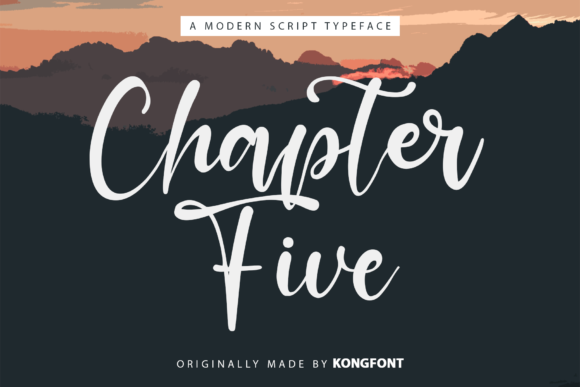
Chapter Five: A Modern Playful Handwritten Font
Finding a typeface that feels both contemporary and personal can be a real challenge. You want something with character, but not so much that it overpowers your message. This is the space where Chapter Five operates. Created by Kong Font Studio, this modern handwritten script font strikes a compelling balance. It’s playful without being childish, stylish without being aloof. For crafters, designers, and entrepreneurs, it offers a versatile tool for adding a human touch to digital and print projects. Its clean lines and smooth curves make it feel fresh and approachable, a welcome departure from overly ornate or stiff script fonts.
Visual Personality and Stylistic Strengths
At its core, Chapter Five is a script font that mimics the fluid motion of a felt-tip pen or a modern brush. The letterforms feature a consistent baseline with gentle, natural variation in stroke width. This gives it an organic, handwritten quality that feels authentic rather than robotic. The connections between letters are thoughtfully crafted, ensuring words flow together smoothly, which is crucial for readability in a handwritten font. It avoids the overly swirly or dramatic flourishes that can date a typeface, instead opting for a clean, confident aesthetic.
What sets this premium font apart is its utility. As a PUA-encoded typeface, every glyph and swash is accessible directly through your system’s character map or design software’s glyphs panel. This means you’re not limited to the basic alphabet. You can easily access stylistic alternates, ligatures, and decorative swashes to customize words and create unique lettering compositions. This level of access is a significant advantage for logo design, where a custom monogram or distinctive initial can make all the difference. It transforms the font from a simple typesetting tool into a creative asset for crafting one-of-a-kind designs.
Where Chapter Five Truly Shines
The true test of any creative font is its application. Chapter Five’s modern, playful personality makes it a strong candidate for a wide range of projects. Its legibility at various sizes makes it more than just a display font; it can be used thoughtfully in longer contexts where a personal touch is desired.
Branding and Identity Work
For small businesses, bloggers, and entrepreneurs building a brand identity, Chapter Five can be a cornerstone. It’s perfect for creating logos, wordmarks, and brand marks that need to feel approachable, creative, and modern. Think of a boutique bakery, a handmade jewelry line, a lifestyle blog, or a creative coaching service. The font conveys warmth and personality immediately. It works beautifully for crafting business cards, thank-you notes, and packaging labels where a handwritten element builds a personal connection with the customer. Pairing it with a clean sans serif font for body text creates a balanced and professional font pairing hierarchy.
Marketing and Digital Content
In the fast-paced world of digital marketing, grabbing attention is key. Chapter Five excels in creating engaging social media graphics. Its handwritten style stands out in a feed dominated by standard fonts, making it ideal for Instagram quotes, Facebook promotions, Pinterest pins, and YouTube thumbnails. It adds a human, authentic voice to your digital presence. For web design, it can be used sparingly but effectively for call-to-action buttons, hero section headlines, or special announcement banners to draw the eye. In email marketing, a subject line or header set in Chapter Five can increase open rates by feeling more personal and less corporate.
Publishing and Editorial Projects
While not a workhorse for body copy, Chapter Five finds a natural home in editorial design. It’s an excellent choice for book cover titles, especially in genres like contemporary romance, young adult fiction, memoirs, or inspirational non-fiction. The font sets a tone of intimacy and personal narrative. For magazines and newsletters, it can be used for pull quotes, section headers, or byline credits to break the monotony of standard serif and sans serif layouts. It injects a dose of personality into otherwise structured grid systems.
Crafting and Personal Projects
This is where the font’s playful spirit is fully unleashed. For crafters using cutting machines like Cricut or Silhouette, Chapter Five is a dream. Its clean, connected script cuts beautifully and weeds easily. It’s perfect for personalizing home décor items, creating custom apparel, designing party invitations, crafting wedding stationery, or making personalized gifts. The accessibility of swashes and alternates allows for endless customization, ensuring every project feels unique. The font’s style aligns perfectly with the modern crafting aesthetic that values both elegance and a handmade feel.
Making Smart Design Choices with Chapter Five
Adopting a new font into your toolkit requires thoughtful consideration. Here’s practical guidance for evaluating and using Chapter Five effectively.
Evaluate the Project Fit. First, consider your project’s tone and audience. Chapter Five is modern, playful, and personal. It’s ideal for brands and projects targeting a demographic that appreciates creativity, authenticity, and a touch of whimsy. It may not be the best fit for ultra-corporate, formal, or traditional contexts where a serif font or a neutral sans serif would convey more authority. Always ask: does this font’s personality align with the message I need to send?
Master Font Pairing. The key to using a strong script like Chapter Five is balance. It works best as an accent, not as the primary font for long paragraphs. Pair it with a highly legible, neutral typeface for body text. A geometric or humanist sans serif font is often a safe and effective choice. For a more classic feel, a clean, modern serif font can also work well. The contrast between the expressive script and the structured companion creates visual interest and ensures your content remains easy to read.
Test for Readability. While Chapter Five is designed for clarity, always test it in context. Check its legibility at the size you intend to use it, especially for important information like event details on a poster or a call-to-action on a website. Use the swashes and alternates judiciously; they can enhance a design but can also hinder readability if overused or placed in a way that confuses letter shapes. A quick test print or a mockup on different screens is always worthwhile.
Understand the Licensing. As a commercial font available through Creative Fabrica, Chapter Five comes with licensing that allows for a wide range of uses, including commercial projects. This is crucial for entrepreneurs and designers using the font for client work, products for sale, or monetized content. Always review the specific license terms provided by the creator, Kong Font Studio, to ensure your intended use is covered. This professional step protects you and respects the work of the font designer.
In a landscape saturated with typefaces, Chapter Five offers a distinct and valuable voice. It’s a design asset that bridges the gap between professional polish and human warmth. By understanding its strengths and applying it thoughtfully, you can leverage this modern typography to create more engaging, memorable, and personally resonant designs across all your creative endeavors.