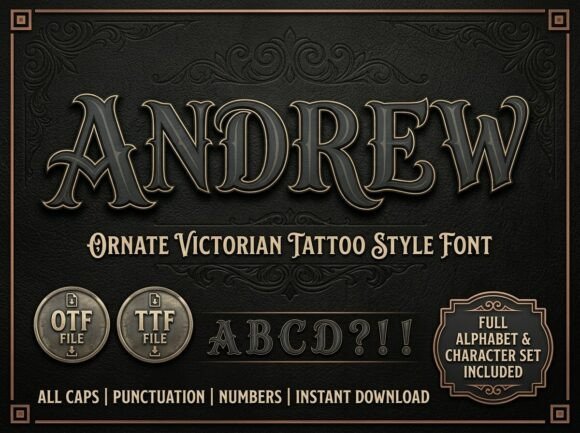
Andrew: The Ornate Victorian Tattoo Style Font
In a digital landscape saturated with minimalist sans serifs and clean geometric shapes, there is a bold resurgence of character, texture, and history. For designers and brand strategists seeking to tap into this aesthetic, the choice of typography is paramount. Andrew is not just another typeface; it is a portal to the golden age of ink, offering a premium display font experience that channels the raw, intricate energy of Victorian tattoo artistry. With its bold, chiseled letterforms and filigree-inspired accents, this all-caps typeface demands attention and commands respect.
The Visual Personality of Andrew
At its core, Andrew is a study in contrast and detail. The font features heavy, blocky structures reminiscent of traditional American tattoo flash sheets, yet it elevates this style with ornamental flourishes that echo Victorian-era typography. You will notice the serifs are sharp and pronounced, providing a solid foundation, while the internal counters and decorative swashes introduce a level of sophistication often missing in display fonts. It is this duality—rugged grit meeting elegant filigree—that gives Andrew its distinct voice.
When you look at the glyph set, you see a typeface designed for impact. The letter spacing is tight, creating a cohesive wall of text that works perfectly for short, punchy headlines. Unlike a standard serif font designed for body copy, Andrew is built to be seen. It does not whisper; it roars. However, the intricate detailing ensures that upon closer inspection, the viewer is rewarded with complexity, making it ideal for projects where longevity and brand recognition are key.
Strategic Applications for Branding and Marketing
Understanding where to deploy a display font like Andrew is crucial for maintaining visual hierarchy and professionalism. Because of its high level of ornamentation, it functions best as a headline or logotype. Overusing it in long paragraphs would compromise readability, but used strategically, it can define a brand's entire identity.
Consider the barbershop and grooming industry. The aesthetic of Andrew aligns perfectly with the revival of classic barbering culture. It communicates tradition, skill, and a no-nonsense attitude. Similarly, for craft spirit labels—think bourbon, whiskey, or artisanal gin—this typeface provides the "old-world grit" necessary to suggest authenticity and heritage. It tells the consumer that the product inside the bottle has a story and a process.
- Apparel Design: For streetwear or heritage workwear brands, Andrew offers a stencil-like quality that translates beautifully to embroidery, screen printing, and DTG printing.
- Poster Art: High-impact poster art, particularly for music festivals, vintage markets, or tattoo conventions, benefits from the font's ability to fill space without looking empty.
- Social Media Graphics: In the endless scroll of a feed, a bold, textured font stops the thumb. Use Andrew for quote cards or sale announcements to create immediate visual interest.
Integrating Andrew into Modern Design Workflows
For the modern typographer or creative professional, integrating a specialized font like Andrew requires a thoughtful approach to font pairing. Because Andrew is so expressive, it pairs best with clean, neutral typefaces. A geometric sans serif or a simple humanist sans can provide the necessary breathing room for Andrew to shine. Avoid pairing it with other ornate script fonts or handwritten fonts, as this will create visual clutter and confuse the reader's eye.
When evaluating project fit, ask yourself about the desired brand perception. If the goal is to appear cutting-edge, futuristic, or strictly corporate, Andrew might not be the right choice. However, if the brand values craftsmanship, tradition, rebellion, or nostalgia, this typeface is an invaluable design asset. It acts as an anchor for the brand identity, setting a mood that is instantly recognizable.
- Test Readability at Scale: Always mock up your designs at the actual size they will be viewed. While Andrew is legible at poster sizes, ensure that distinct letters (like 'C' and 'G' or 'R' and 'B') remain easily distinguishable in your specific color palette.
- Review Included Styles: Explore the full character map. Often, display fonts include alternate characters or ligatures that can solve kerning issues or add unique flair to a logo lockup.
- Licensing and Usage: Ensure your commercial font license covers all intended touchpoints, from web design to merchandise. A premium font investment protects your client legally and ensures high-quality rendering across all platforms.
Enhancing Audience Engagement
Typography is a silent ambassador for your brand. The choice to use a creative font like Andrew signals to your audience that you care about the details. In editorial design, such as a magazine feature on vintage motorcycles or artisanal craftsmanship, this typeface sets the stage for the content. It primes the reader to expect high-quality, curated information.
Ultimately, Andrew is more than just a collection of vectors; it is a tool for storytelling. By leveraging its Victorian roots and tattoo-style precision, designers can create logos, packaging, and marketing materials that resonate on an emotional level. It bridges the gap between the past and the present, offering a timeless solution for anyone looking to inject bold personality into their visual communication.